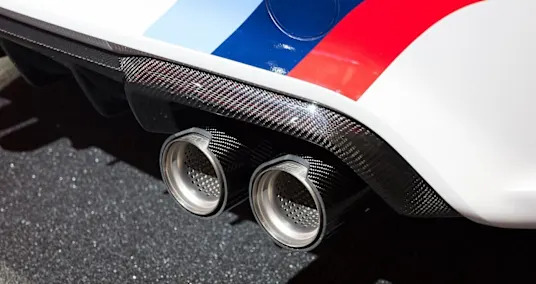

There are courtroom dramas, and then there are courtroom dramas involving two of Germany’s most powerful automotive names. This one falls firmly into the latter category.
In a case that tried to fast-track the end of the internal combustion engine through legal muscle rather than policy, environmental activists took aim squarely at BMW and Mercedes-Benz.
The goal was bold, some would say audacious. Force both automakers to stop selling new combustion-engine cars by 2030. Not through legislation, but through the courts.
Spoiler alert. The courts were not impressed.
The Court’s Position

Germany’s Federal Court of Justice, the country’s highest civil court, shut the whole thing down. The lawsuits, brought by environmental group Deutsche Umwelthilfe, argued that both companies were effectively burning through more than their fair share of a finite global carbon budget.
In their view, continuing to sell combustion-engine cars past a certain point was not just environmentally questionable, it was legally actionable.
It is an argument that sounds compelling over coffee. The planet has a carbon limit, companies contribute to emissions, so why not assign responsibility directly? The problem is that the law does not quite work like that. The court ruled that no specific carbon budget had been legally assigned to individual companies. Without that, the entire case loses its foundation.
In other words, you cannot penalize someone for exceeding a limit that does not officially exist.
That single point turned what could have been a landmark climate case into a legal dead end.
Why the Stakes Were So High
Still, the implications of the lawsuit were massive. Had the court ruled differently, it would have effectively allowed activists to dictate product strategy for global automakers via litigation. Imagine a world where a judge, not a regulator, decides when BMW stops selling a 3 Series with a combustion engine. That is the kind of precedent that would send boardrooms into panic mode across the industry.
Instead, the ruling restores a familiar order. If combustion engines are to be phased out, it will happen through government policy, not courtroom creativity.
That distinction matters more than it seems.
Europe already has a complicated relationship with its own proposed bans. The European Union’s 2035 phaseout of new combustion cars has been softened, tweaked, and politically debated to within an inch of its life. Add lawsuits like this into the mix, and suddenly automakers are not just building cars. They are navigating a legal minefield where the rules could change depending on who files a case next.
LATEST POSTS
- 1
 Instructions to Safeguard Your Speculations In the midst of Changing Disc Rates
 - 2Dozens of hidden star streams found in the outskirts of our Milky Way galaxy
- 3Instructions to Plan for Your Teeth Substitution Methodology
- 4Instructions to Augment the Presentation of Your Kona SUV
- 5Novo and Lilly cut prices of weight-loss drugs in China




- Embrace Effortlessness: Moderation and Cleaning up Tips
- ‘Wicked: For Good’ streaming release — How to watch the sequel starring Ariana Grande and Cynthia Erivo
- Russia earning billions from Hormuz blockade, German trade body says
- Influencers are selling a delusional fantasy of being postpartum. Why is it so easy to believe?
- ‘Inoculation’ helps people spot political deepfakes, study finds
- SpaceX launches Starlink missions in dual-coast spaceflight doubleheader (videos)
- ‘The White Lotus’ sparked online interest in risky anxiety pills, study says
- South African radio presenter among five charged over Russia recruitment plot
- South Carolina's measles outbreak reaches 434 cases